

As we pick up the next leg of our journey to spiritual activism, let us review where we are now. We have our meditation or centering prayer-contemplation practice (ideally, a consistent daily practice of at least 15 minutes/day at a regular time which one slowly, gently builds upon to at least 30 minutes a day not to exceed an hour a day unless one is working with a reputable, advanced spiritual teacher).
We selected and have begun studying our initial map of the territory –a trustworthy, comprehensive psycho-spiritual conceptual framework (see essays 1-3 of this series for some options). We have a spiritual friend and/or a support group with whom we can authentically discuss our efforts and experiences. We also may be journaling and working with a therapist, coach, or spiritual director.
As part of our ongoing healing phase of our journey, we are also practicing self-observation with the intention of “recognizing” when afflictive or negative emotions arise within us, and we are starting to cultivate the capacity to “refrain” from associated hurtful and destructive habituated reactions and patterns.
As we continue these practices (remember this is a life-long spirally journey!), we may notice that we are becoming less reactive, more self-aware, and more able to self-regulate. Thus, we can start to move further into the maturation phase of our three-phase model of the journey to spiritual activism–healing, maturation, and transformation coupled by the increasing arising of and responsiveness to heart-felt inspiration for action that decreases suffering and increases justice, harmony, ecological sustainability, etc. in the world.
Now we are ready to add releasing and replacing to our practice of recognizing and refraining. First, we can release some of the charge of an afflictive emotion or memory with the help of simple techniques such as “pausing” and taking a few deep breaths, or gently putting attention on one’s feet while feeling contact with the floor below. These can be coupled with a silent inner statement of an internal observation, such as “anger arising” which allows for recognition/acceptance of an emotion and restraint while constructively discharging potentially charged energy coupled with an emotion.
According to psychology and neuroscience, it only takes 90 seconds for charged emotional reactions to work their way through our bodies. Thus, if/when a trigger emotion lasts longer than that, we are feeding it with our thoughts and perpetuating the effects on self and others. While recorded over 15 years ago, Dr. Jill Taylor’s TedTalk (and related book, A Stroke of Insight) is as inspiring and relevant now as it was then on this topic.
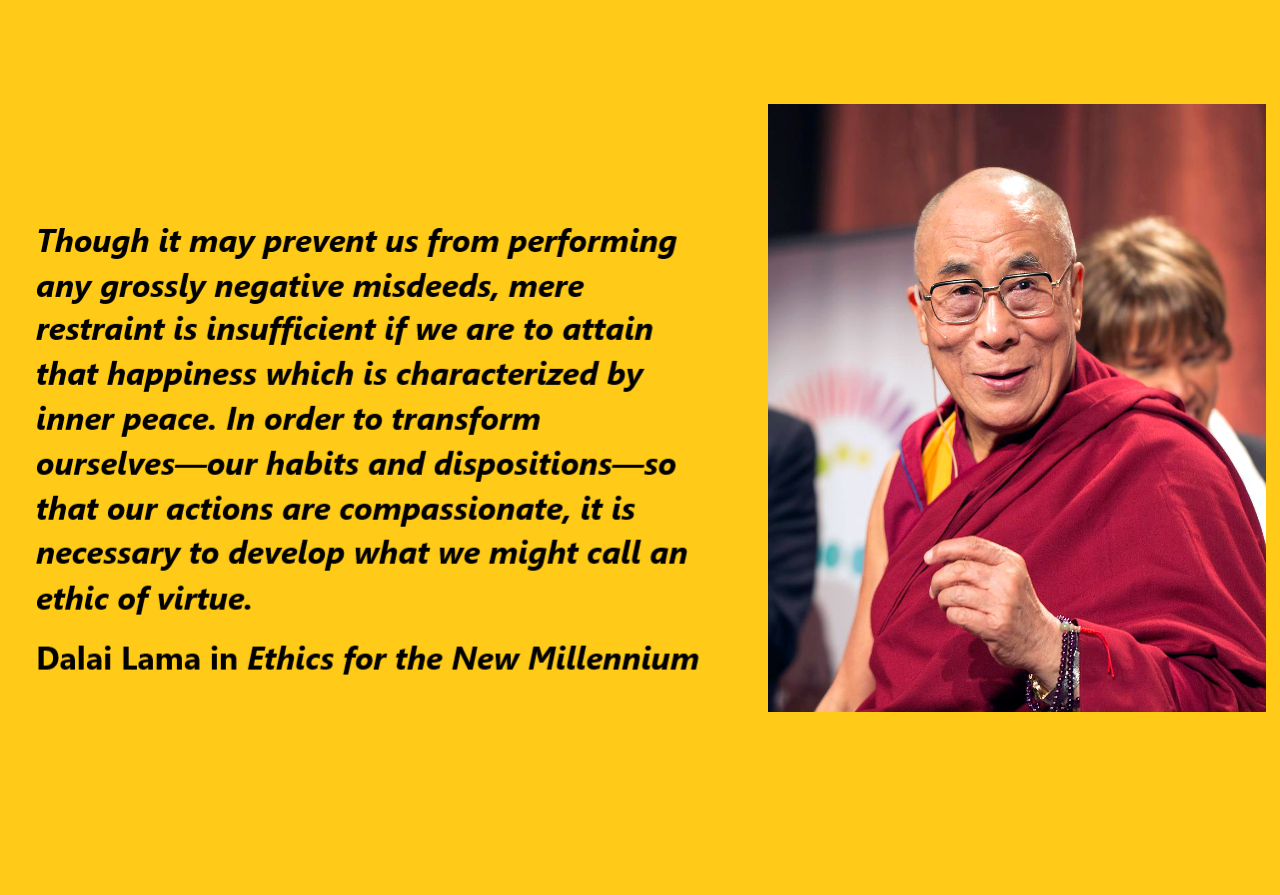
With some of the energy surge of an afflictive emotion released, we can now replace a negative reactionary habit with a preferred mode of being or ideal. This next phase moves us into the domain of values and ethics which for many people is associated with their faith tradition or spiritual path. Thus, I encourage you to select the values and ethical ideals that most inspire and move your heart to a higher good (e.g., compassion, sustainability, stewardship, justice, etc.) and away from automatic self-centered, negative, hurtful, and destructive modes of being. This replacing phase marks a conscious choice to more mature, responsible, and compassionate speech and actions, and can include a supportive silent prayer, mantra, or saying in the moment such as “love is my decision,” “I have more than enough,” “time is my friend,” the Buddhist Loving Kindness mantra (or metta), or some other anchor word, scripture, mantra or the 12-Step slogans (e.g., “Keep it Simple”).
There are many options for support here to include scripture and literature from one’s chosen or inherited religious tradition or spiritual path. I have benefited from the study of many teachers across the world’s wisdom traditions. Thus, while I have been shaped and inspired by my study and practice of world religions and philosophy, I most resonant with the values taught and lived by Christ Jesus in the Christian Gospels, the Unitarian Universalist Seven Principles, and the Eightfold Path of Buddhism.
In addition, virtue ethics, with roots in Greek philosophy and Christian writings on virtues and vices is and has been highly informative, instructive, and inspirational to me. Most recently, this material includes Brant Pitre’s writings on the topic in his book, Introduction to the Spiritual Life, and Rebecca Konyndyk DeYoung’s book, Glittering Vices.
To be continued
 Metamorphosis